

Detained by ICE With No End in Sight? Here’s the Federal Tool That Can Force Your Release.
Please note: our firm is not currently accepting new habeas corpus cases. This article remains available as general information. If you or a loved one is in ICE detention, we can still review your situation and explain your options during a Discovery Session.
Months pass. No bond hearing. No decision. No clear answer for the family waiting at home. This is the reality for thousands of immigrants held in ICE detention across the United States.
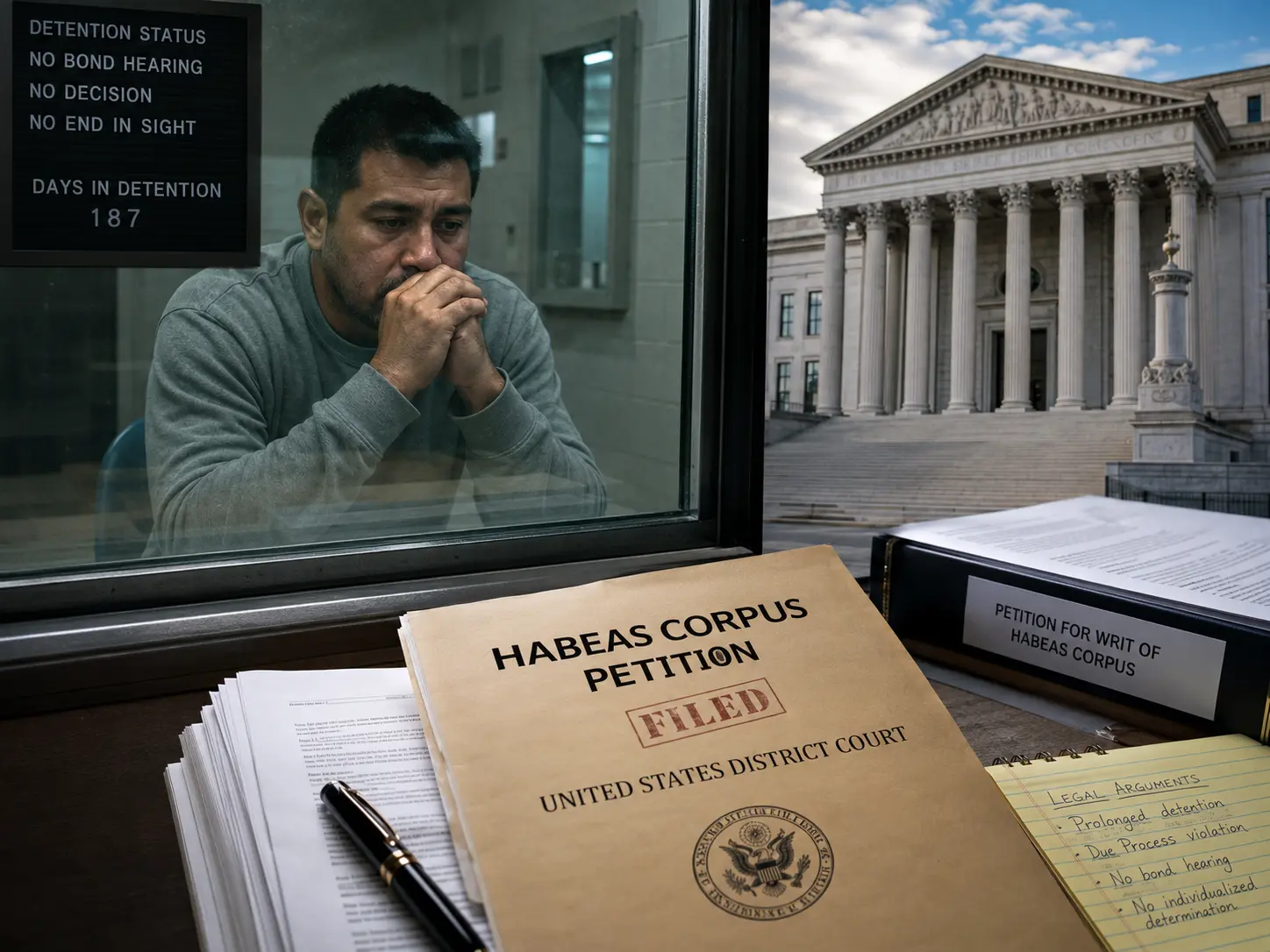
When the immigration system stops moving, federal law offers a direct constitutional tool to fight back: a Petition for Writ of Habeas Corpus.
It is not an appeal of an immigration case. It is a challenge to the detention itself — brought before a federal judge who has the power to order release.
 Is a Family Member Detained? Talk to Us.
What Is a Habeas Corpus Petition?
A Habeas Corpus petition is a direct constitutional challenge to the government’s authority to keep a person in physical custody. Filed in Federal District Court, it asks a federal judge — not an immigration judge — to review whether the detention is lawful.
The court can order the person released or require that a bond hearing finally be held. It does not decide the merits of the immigration case or grant legal status, it addresses one thing: physical liberty.
"A Habeas Corpus petition is not about winning the immigration case. It is about getting someone home while that case continues."
When Does It Apply?
Federal courts use six months (180 days) as the benchmark for when detention becomes unreasonable. The following situations most commonly support a petition:
 Detained over 6 months with no bond hearing and no final decision — a frequent due process violation.
Home country refuses return. If a final removal order exists but the country won’t issue travel documents, detention can become indefinite. One of the strongest grounds.
Bond denied or set impossibly high. A $100,000 bond for someone with no income, for example, is functionally the same as no bond at all.
Mandatory detention under § 236(c). Even when ICE argues a criminal record requires detention without bond, indefinite detention violates the Constitution after six or more months.
Serious untreated medical condition. ICE’s failure to provide adequate care adds urgency and often strengthens a petition significantly.
Requirements Before Filing
A federal judge will dismiss a Habeas petition filed by someone who skipped the immigration court process. The path must run in this order:
1. Request bond from the Immigration Judge.
2. Receive a denial — or a bond amount that is realistically impossible to pay.
3. File the Habeas Corpus petition in Federal District Court, arguing the detention is unconstitutional.
Not sure where your case stands in this process? Bring us whatever paperwork you have. Part of our evaluation is figuring out exactly what has happened and what comes next.
 The strongest petitions tend to share these features:
- Detained 6+ months
- Bond formally requested and denied
- Final removal order exists, but home country won’t accept return
- Full cooperation with ICE
- Serious untreated medical condition
How Goldstein Immigration Lawyers Can Help
Our federal litigation team handles every stage of the Habeas Corpus process:
 Detention Evaluation: We review how long the person has been detained, under which legal authority, and whether the timeline crosses the thresholds federal courts recognize.
Record Review: We gather detention records, bond history, and any removal orders to build an accurate picture of the case.
Bond Request (if not yet filed): We handle the bond request before the Immigration Judge so the record is properly preserved for federal court.
Petition Drafting and Filing: We prepare and file the petition in the correct Federal District Court.
Federal Court Litigation: We respond to the government’s filings, appear before the federal judge, and press for release or a prolonged-detention bond hearing.
Medical Documentation: Where ICE is failing to provide adequate care, we document it and put it in front of the court.
Family Communication: We keep families informed at every stage and explain what to expect next.
A Case We Won: Manuela’s Story
In December 2025, Manuela — an asylum seeker from Colombia living in Bakersfield, California — went to an ICE office to swap her electronic monitor as instructed. Instead of a new monitor, she was arrested.
In detention, her health collapsed. Fainting spells. IV fluids every one to two days. A bacterial stomach infection. The facility doctor described her as "very fragile." ICE pushed through a removal order in March 2026 while she was too ill to gather evidence to defend herself.
We filed an emergency Habeas Corpus petition in federal court. On May 5, 2026, the judge granted it and ordered Manuela released immediately.

Every Week in Detention Matters
Habeas Corpus cases move on our fastest track. If you have a family member who has been held for months with no bond hearing, no answer, and no clear path forward — the timeline matters and so does acting quickly.
Bring us whatever paperwork you have. We will review the dates and tell you honestly where the case stands and whether a petition makes sense.
Is a Family Member Detained? Talk to Us.
We will evaluate the detention timeline, review the record, and tell you plainly whether a Habeas Corpus petition is the right move.
 Call us:
  Visit:
 Frequently Asked Questions
Habeas Corpus is filed in Federal District Court and challenges the detention itself — the goal is physical release. Removal defense is handled in Immigration Court and challenges the government’s right to deport someone. They are separate cases with separate goals. Many clients need both, and we will explain clearly which service covers what.
Posted in: Blog, Detention, Federal Litigation, Immigration